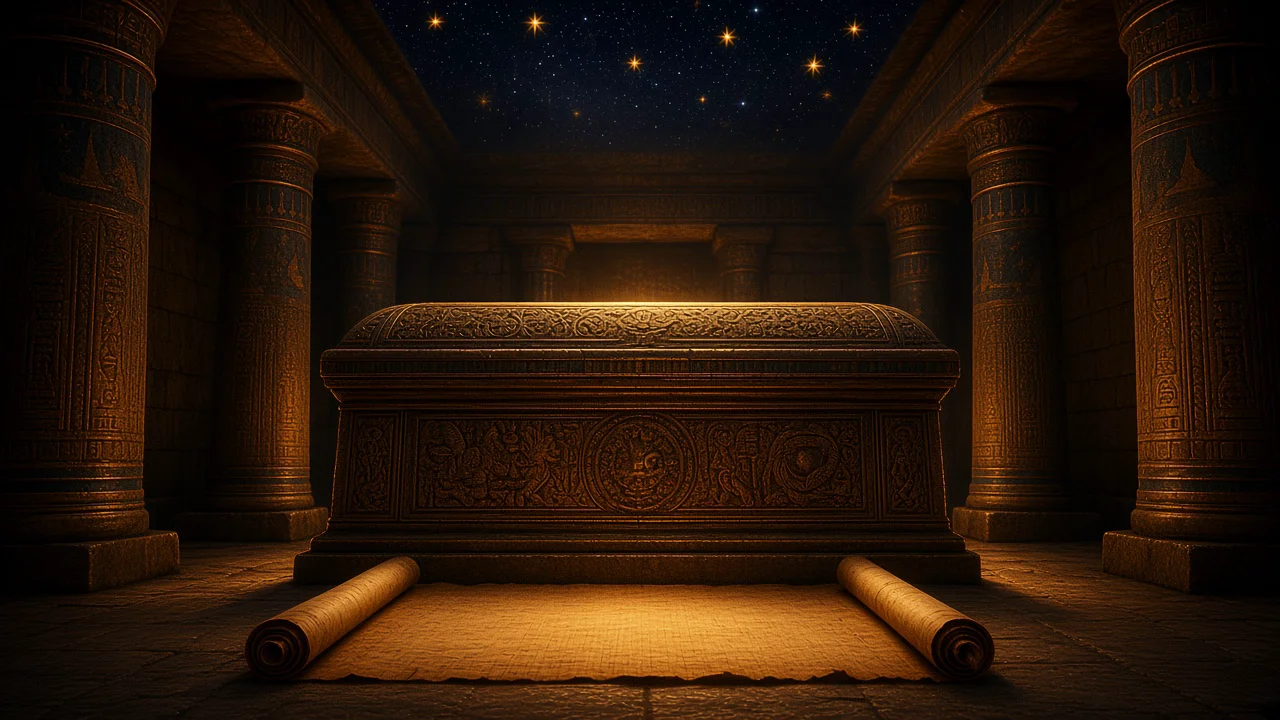
Three traditions
UCLA's article on funerary rituals describes a textual tradition that begins in the Old Kingdom with the Pyramid Texts of kings and queens, then continues in the Middle Kingdom Coffin Texts and the New Kingdom Book of the Dead. Much of what tomb chapels recite alongside offering scenes comes from the sacerdotal side of that literature, texts performed by priests for the deceased.
The same article warns that rebuilding one complete funeral by stitching pyramid spells together is speculative. Different reconstructions diverge. This page keeps the three corpora separate and does not print their spells.
Pyramid Texts
James Allen's UCLA article on Old Egyptian identifies the Pyramid Texts as rituals and spells inscribed in the pyramid of Unas, in Dynasty 5, and in the pyramids of his successors in Dynasties 6 and 8. They are ancestral to the Coffin Texts. Some spells in the two corpora are identical, and other Coffin Texts are reedited Pyramid Texts.
Allen also notes how limited the Old Egyptian evidence is. Funerary texts can be formal and archaic. They contain virtually no narrative. A pyramid chamber is not a storybook of the afterlife.
Coffin Texts and the Book of the Dead
UCLA's article on linear hieroglyphs places most Coffin Texts, inked or incised, in that script on Middle Kingdom coffins and burial chambers. It describes the later Book of the Dead as the continuation of that funerary use of linear hieroglyphs. Early New Kingdom royal burial chambers were sometimes decorated with the Amduat and the Litany of Ra in the same linear style, laid out like an unrolled papyrus.
Alexander Ilin-Tomich's UCLA article on the Second Intermediate Period states that the Book of the Dead is first attested in the early Second Intermediate Period and continued in use for much longer. Judgment scenes familiar from the Papyrus of Ani, including Spell 125, belong to this later Book of the Dead tradition. They are not the whole of it.
Practice on this site
Read the weighing of the heart, the assessors, and the gates of the Duat for the judgment and night-journey pages already on this site. Those pages are cited summaries. They are not editions of the spells. The games that follow them are practice. They unlock nothing.
Sources & References
- UCLA Encyclopedia of Egyptology – Funerary Rituals (Pharaonic Period)
- UCLA Encyclopedia of Egyptology – Old Egyptian
- UCLA Encyclopedia of Egyptology – Second Intermediate Period
- UCLA Encyclopedia of Egyptology – Linear Hieroglyphs
- UCLA Encyclopedia of Egyptology – Judgment after Death (Negative Confession)
- British Museum – Papyrus of Ani (EA 10470)